How Brokers Calculate Reserves for Asset Utilization

Table of contents
If you use the same asset dollars for income and reserves, the file can fail. That’s the main rule. In asset utilization loans, I treat reserves as a separate post-closing test: calculate the housing payment, apply lender discounts to eligible assets, subtract cash needed to close, and then see if the borrower still has enough funds left for the required number of months.
Here’s the short version:
- Reserves are not income. Assets used to create qualifying income cannot also cover reserves.
- Reserves are measured in months of PITIA, which usually includes principal, interest, taxes, insurance, and HOA dues. PMI may count too if the program requires it.
- Many loan programs ask for 6 to 12 months of reserves, but the count can change by lender, loan size, property type, and borrower profile.
- Cash to close comes out first. A borrower with $85,000 in eligible assets and $52,000 due at closing has $33,000 left for reserves.
- Haircuts matter. Cash may count at 100%, but brokerage and retirement funds often count at only 50% to 80%.
- The basic math is simple: monthly PITIA × reserve months = reserve target. Example: $3,200 × 9 = $28,800.
- Statements matter too. Many lenders want 60 to 90 days of account history and may ask about large deposits, margin balances, or recent trades.
A clean reserve review usually comes down to four checks:
- Build the right monthly payment.
- Use only eligible accounts.
- Apply the lender’s haircut by account type.
- Keep the reserve pool separate from the depletion pool.
That’s the whole framework I’d use before I send the file to underwriting.

How Brokers Calculate Reserves for Asset Utilization Loans
Mortgage Reserve Requirements - What are they?
sbb-itb-0c82095
Step 1: Calculate the Monthly Housing Payment Used for Reserves
Brokers should use the final loan terms, not an early estimate. Build the reserve payment from the terms that will actually close, so the reserve test matches what the borrower is expected to pay each month.
How to Build the Full PITIA Figure
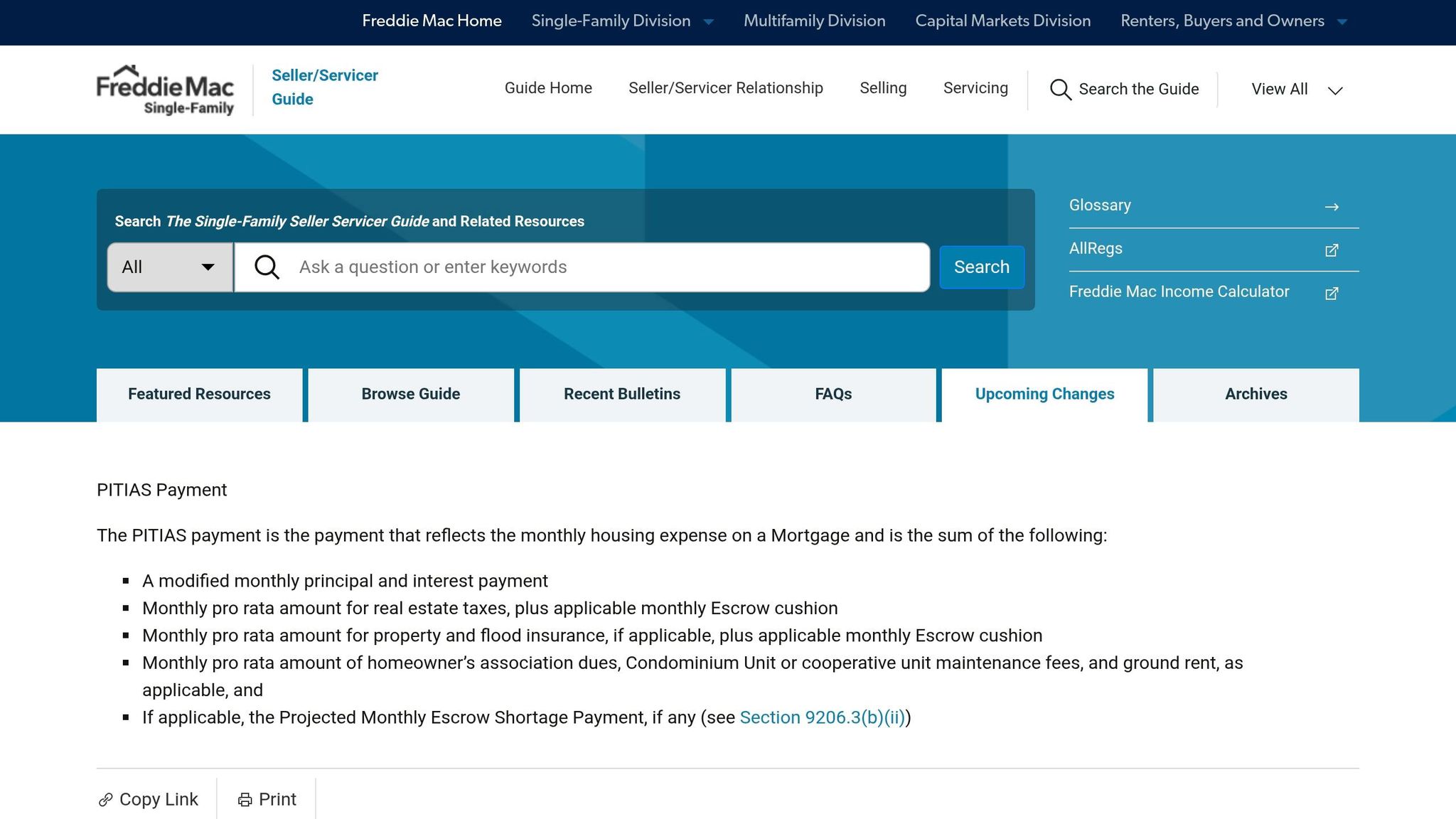
PITIA has five parts: principal and interest, property taxes, homeowners insurance, association dues, and, when needed, mortgage insurance.
| PITIA Component | Calculation |
|---|---|
| Principal & Interest | Based on the final loan amount, interest rate, and amortization term |
| Property Taxes | Annual property tax bill ÷ 12 |
| Homeowners Insurance | Annual premium ÷ 12, including any required wind or flood coverage |
| Association Dues | Actual monthly HOA or condo fee |
| Mortgage Insurance | Monthly PMI if required by the loan-to-value ratio |
Wind or flood coverage can change PITIA by a lot. Verify insurance early so the payment is based on actual costs, not a rough guess. For condos, check dues and insurance against the master policy and HOA questionnaire.
Which Payment Figure the Guideline Uses
Use the payment figure required by the guideline. Some programs use PITIA. Others use principal and interest only. For interest-only loans, confirm whether reserves are based on the interest-only payment or the fully amortizing payment.
Also include any required subordinate-lien payment in the reserve calculation.
Set the payment using the final loan structure and the guideline’s payment definition before you calculate reserve months. After that, move to eligible assets and lender haircuts.
Step 2: Identify Eligible Accounts and Apply Asset Haircuts
Once PITIA is set, the next move is simple: include only eligible asset utilization reserve assets. Start with the most liquid accounts, then apply the lender’s reserve factor to anything less liquid.
Asset Account Types That May Count Toward Reserves
Not every asset counts. And even when it does, the lender may treat it differently.
Checking, savings, money market accounts, and CDs usually count at 100%. Brokers can also often use non-retirement brokerage accounts that hold stocks, bonds, mutual funds, and ETFs. Retirement accounts may count too, including 401(k), IRA, Roth, and SEP plans, but only if the loan program allows them.
Trust- and LLC-held investment accounts count only when ownership and control are clearly backed up by trust papers or organizational records. Vested RSUs may also count once they’ve been deposited into a brokerage account. Unvested RSUs, private equity, physical gold, thinly traded penny stocks, most cryptocurrency, and margin or pledged balances usually do not count.
Business funds need extra care. Many programs allow them only when the guideline says so and the broker can show that taking the money out will not hurt the business.
How Haircuts Are Applied by Account Type
A haircut is the discount a lender applies to an account balance before that balance counts toward reserves. After you confirm an account is eligible, apply the lender’s reserve factor by account type.
| Account Type | Reserve Factor | Notes |
|---|---|---|
| Checking, Savings, Money Market, CDs | 100% | Counted at full face value |
| Brokerage (Stocks, Bonds, Mutual Funds, ETFs) | 70%–80% | Discounted for market volatility risk |
| Retirement (age 59½ or older) | 70%–80% | Higher factor because access is generally penalty-free |
| Retirement (under age 59½) | 50%–65% | Lower factor to account for early withdrawal penalties and taxes |
| Concentrated Stock (>25% of account) | 40%–60% | Extra discount for single-position volatility risk |
| U.S. Treasuries (notes and bills) | 90%–100% | Near-cash treatment due to high liquidity |
Always use the lender’s current matrix. Reserve factors can change by program, and small differences here can shift the final result.
Documentation, Seasoning, and Deposit Review
For each account you want to use, collect the most recent 60 to 90 days of complete PDF statements with the borrower’s name clearly shown. For brokerage accounts, include the latest monthly statement and the most recent quarterly position report so the lender can verify holdings, cost basis, and ownership. For retirement accounts, pull the plan summary to show distribution rights and any penalties that may apply.
Most lenders want 60 to 90 days of seasoning. If there’s a large deposit or a sudden jump in balance during that window, underwriting will likely ask about it. When a recent liquidity event changed the balance, include trade confirmations or a short source-of-funds explanation before submission. Doing this upfront can save you from last-minute conditions that slow down closing.
Also review statements for margin loans or pledged asset lines. If a brokerage account has a margin balance, subtract that amount from the eligible total before applying the haircut, since that collateral is already encumbered.
Step 3: Calculate Required Reserves Without Double-Counting Assets
After you apply haircuts, compare the remaining eligible balance to the reserve target without counting the depletion pool twice. This step covers the formula, the post-close subtraction, and the rule that keeps reserves separate from qualifying income.
Convert PITIA Months to Dollars
The math is simple: monthly PITIA × required reserve months = reserve target. For investors, DSCR loan guidelines often dictate these specific reserve targets.
For example, if a borrower's full PITIA is $3,200 per month and the program calls for 9 months of reserves, the target is $28,800. That net amount must still be there after closing. Reserve rules change by program, so check the current guideline matrix before you lock in the figure.
Subtract Funds Already Committed to Closing
Reserves are the funds left after closing, not the balance before closing. Subtract all funds needed to close before you test reserves.
Here’s what that looks like in practice: if a borrower has $85,000 in eligible liquid assets and needs $52,000 to close, only $33,000 is left for reserves. If the reserve target is $28,800, the file passes. If the target is $35,000, it does not pass - even if the total account balance looked fine at first glance.
Apply that deduction to cash accounts first, then to discounted assets. Keep the reserve balance separate from the income calculation so the broker checklist stays clean.
Keep the Reserve Pool Separate From the Depletion Pool
In asset utilization files, the assets used to calculate qualifying income - the depletion pool - must stay separate from the assets used to meet reserve rules. Reserve funds can't also be used for the depletion pool.
A simple two-column submission memo can help:
- One column for the qualifying base
- One column for post-close reserves
If the borrower is taking distributions from a retirement account, deduct the required retirement distribution amount from that balance before using the rest for reserves. When you review the file before submission, give reserves their own line item.
Broker Checkpoints Before Submission and Key Takeaways
Pre-Submission Checks That Prevent Reserve Conditions
After PITIA, eligible assets, and haircuts are set, run these checks before you package the file.
Verify the reserve-month requirement, eligible accounts, and haircut factors in the current lender matrix. Then make sure the reserve pool is separate from the depletion pool.
Verify eligible accounts and apply the correct haircut. Use the lender matrix to confirm the current reserve factors by account type.
Check statement recency. Use statements dated within the lender’s recency window. If a statement is too old, add a live-balance backup.
Source any large deposits before you count those funds toward reserves.
Document the depletion pool and reserve pool separately. Show each account, the haircut, the cash-to-close deduction, and the remaining PITIA coverage in one summary.
Add any lender-required reserves for other financed properties.
Key Points to Remember for Faster Submission
Once the checklist is clean, trim the file down to the reserve target and post-close balance.
Reserves and asset utilization income are separate tests, so the same pool of assets cannot satisfy both. Before you compare balances, make sure the PITIA figure is right. It should include principal, interest, taxes, insurance, HOA dues, and PMI when required. The account type decides how much of a balance counts, and you need to subtract cash to close before you compare anything to the reserve requirement.
Clean reserve math, complete documentation, and a clear split between the depletion pool and the reserve pool help files move through underwriting with fewer conditions. If a file has mixed account types, retirement distributions, or multiple properties, an early scenario review can catch problems before submission.
FAQs
What assets count for reserves?
Reserve assets must be liquid, verifiable, and accessible after closing.
That usually means lenders look for funds you can document and, if needed, use without a major hurdle.
- Checking, savings, money market, and eligible CDs: usually 100%
- Stocks, bonds, and mutual funds: typically 70% to 100%
- 401(k)s and IRAs: may count if access is documented, often discounted 30% to 50%
- Unvested stock, cryptocurrency, collectibles, and private equity: generally do not count
How do lenders treat retirement accounts?
Lenders can count retirement accounts as eligible assets, but they usually apply a haircut to the vested balance to account for taxes and early-withdrawal penalties.
Here’s how it usually works:
- For borrowers age 59.5 and older, lenders often use 70% of the vested balance.
- For borrowers under 59.5, they often use 60% to 65%.
After they subtract any required costs, the amount left is used to figure out monthly qualifying income.
What can cause a reserve calculation to fail?
A reserve calculation can fail for a few simple reasons: bad paperwork, assets that don’t qualify, or plain math mistakes.
Some of the most common issues are:
- Counting illiquid assets
- Including unvested employer stock
- Using borrowed funds
It can also fail because of double-dipping, skipping required haircuts, missing liabilities like margin loans, or falling short of minimum post-closing liquidity rules.
Related Blog Posts
Related Blog Posts

Mortgage Calculator
Estimate your monthly mortgage payment, loan amount, and total costs with taxes, insurance, PMI, HOA, and payoff details.