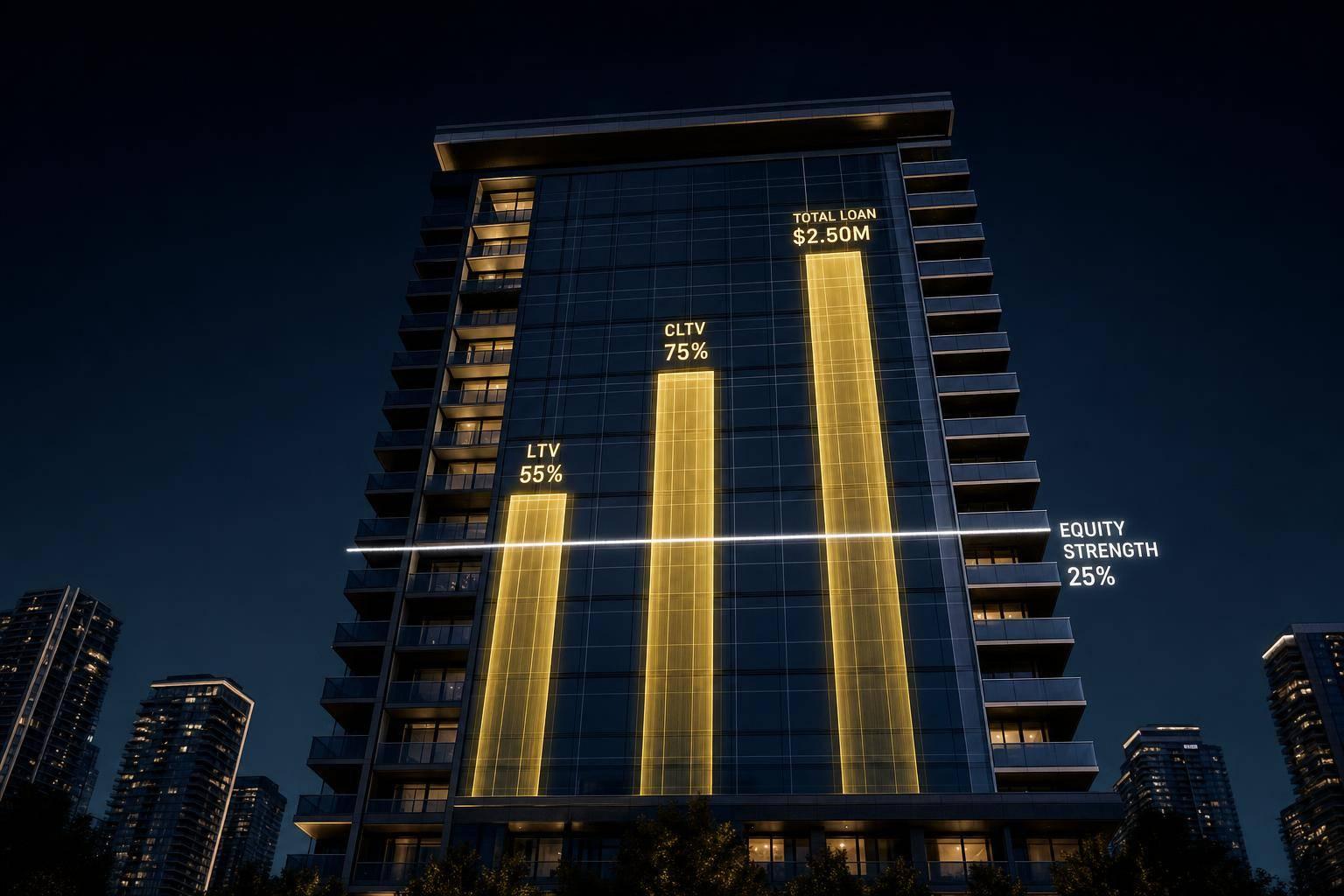
DSCR Second Lien Loan Amount Caps
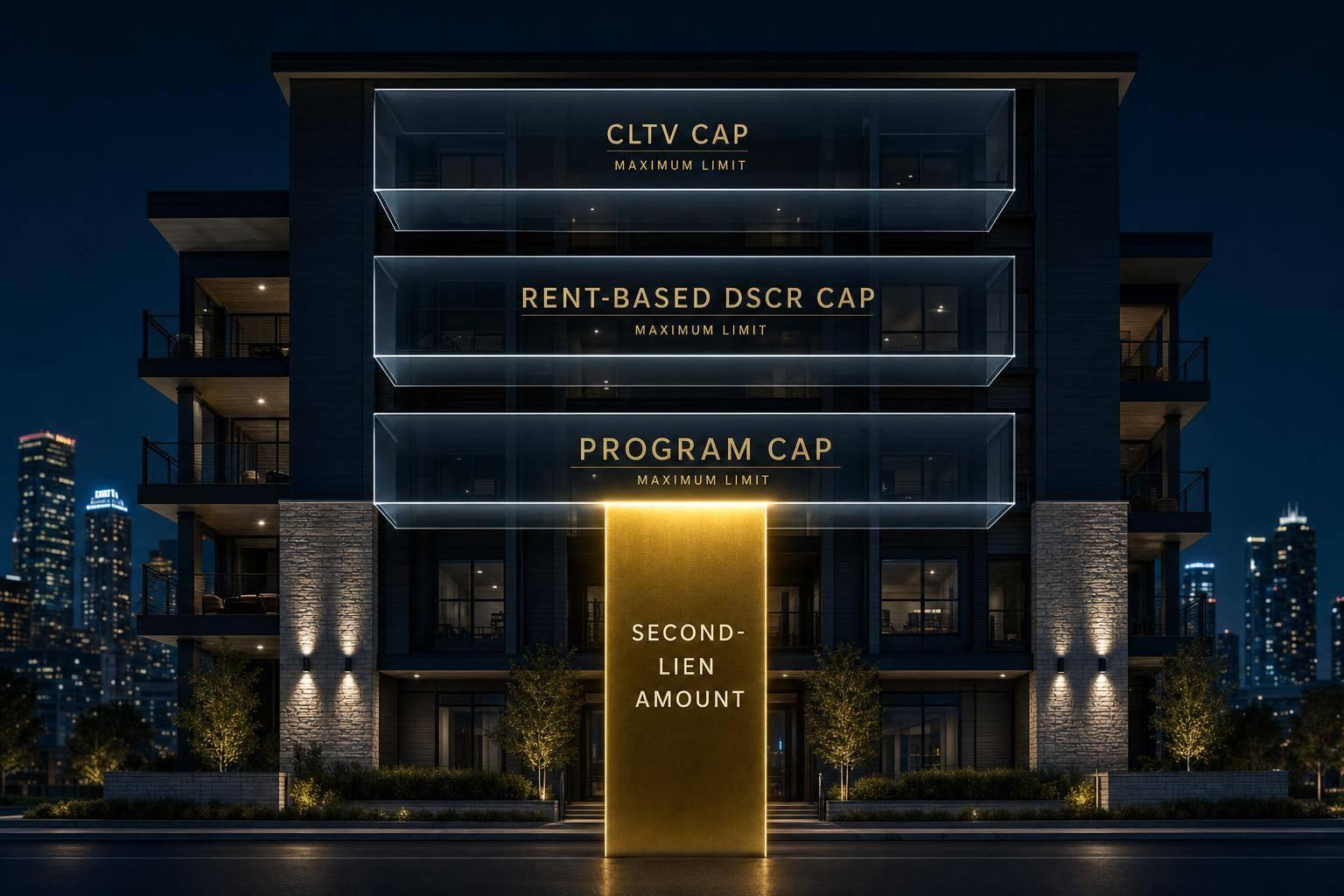
Table of contents
The max DSCR second lien is usually the lowest of 3 limits: the lender's dollar cap, the CLTV cap, and the rent-supported payment cap.
If I had to sum up the whole topic in one line, it would be this: equity may show how much room is on paper, but rent often decides how much the borrower can actually get. Many programs land in the $75,000 to $750,000 range, while some go up to $2,000,000. But that top number only matters if the file also fits CLTV, DSCR, property type, credit, reserves, and lien-position rules.
Here’s the short version:
- Start with CLTV math:
Property value × max CLTV, then subtract the first mortgage and any other liens. - Then test DSCR:
Rent must cover the first lien payment + new second lien payment. Many lenders want 1.00 to 1.25 DSCR. - Program caps still apply:
A file may fit the math and still hit a lender max. - Property type changes the ceiling:
1-unit investment properties often go to 80% CLTV.
2–4 units often drop to 75%. - Other limits can cut the amount:
Credit score, reserves, occupancy, short-term rental haircuts, and mixed-use treatment. - Some files need a different setup:
If the request is too high, the appraisal is low, or DSCR comes in short, a first-lien cash-out or another program may fit better.
Here’s a simple example:
- Home value: $800,000
- Max CLTV: 80%
- Max total liens: $640,000
- Current first mortgage: $450,000
- Room for second lien: $190,000
But if the rent cannot support the added payment, the loan amount may end up below $190,000.
| Limit check | What it does | Common range |
|---|---|---|
| Program max | Sets the top dollar amount allowed by the lender | $75,000 to $750,000, sometimes up to $2,000,000 |
| CLTV max | Sets how much total debt the property can carry | 75% to 85% in many cases |
| DSCR test | Checks whether rent covers both liens | 1.00 to 1.25 minimum in many programs |
If I’m reviewing a file, I want these 3 numbers up front. That tells me fast whether the deal fits standard DSCR loan requirements or needs to be reworked.
2nd lien DSCR loans for investors- Talk to Vinny with the Biscotto Team
sbb-itb-0c82095
What Sets the Maximum Second Lien Loan Amount
After the headline cap, lenders work out the actual limit based on the property and where the lien sits. They set second-lien caps by looking at equity and program rules. The program cap is the outside limit. The lien math tells you what you can actually use.
The Core Calculation Brokers Use
Brokers usually start with the appraised value, apply the program’s max CLTV, and then subtract the first mortgage and any other junior liens. What’s left is the available second-lien capacity.
Example: At an $800,000 value and 80% max CLTV, total allowable debt is $640,000. Subtract a $450,000 first mortgage, leaving $190,000 for the second.
Here’s the simple difference: LTV looks at one loan against the property value, while CLTV looks at all liens against that value. So if there’s already another junior lien in place, that takes away room for a new second.
For investment property second liens, standard CLTV ceilings usually fall between 80% and 85% for single-family residences. For 2–4 unit properties, that range often drops to 75% to 80%.
That gives you the starting figure. But overlays from the lender can still push the number down.
Why a Published Max Loan Amount Is Only One of Several Limits
A $750,000 cap is just the top end. It does not mean every borrower can get $750,000.
Other factors can cut the usable amount, including:
- Credit
- Property type
- Market conditions
- Seasoning
- Transaction purpose
There’s also a gate many borrowers miss: the first lien has to allow a second lien. If the senior lender doesn’t permit it, the second lien can’t close.
And even if the equity looks fine on paper, DSCR and the property’s cash flow can still trim the final loan amount.
How DSCR and Property Cash Flow Affect Loan Size
After CLTV sets the top limit, DSCR decides how much of that limit the property can actually carry. A deal can look fine on paper from an equity standpoint, then hit a wall once the lender checks the rent against the full debt load. That includes the first mortgage and the new second lien payment.
How DSCR Affects Eligibility
Most lenders want a minimum DSCR between 1.00 and 1.25 for second lien approval. The formula is straightforward: DSCR = Gross Monthly Rent ÷ (Existing 1st Lien PITIA + New 2nd Lien Payment).
The key detail is this: underwriters look at the combined debt payment, not just the second lien by itself. So if you're sizing the loan, the clean way to do it is to work backward from the property's rent and the lender's target DSCR. Then subtract the current first mortgage payment. What remains is the largest payment the second lien can have.
That can change the picture fast. A property may have $150,000 in equity and still only support a small second lien if rental income is light.
Loan structure matters too. If the loan is interest-only, underwriters may use ITIA instead of PITIA. That lowers the tested payment and can improve DSCR, which may allow a larger second lien. On the flip side, a below-market lease can drag the numbers down. Lenders often use the lower of the actual lease amount or the appraised market rent, so weak lease income cuts the maximum second lien amount.
Other File Factors That Still Matter
Cash flow is a big part of the file, but it isn't the only gatekeeper. Other lender rules can shrink the deal size too.
- Reserves: Loans over $1.5 million usually require 6 months of PITIA in liquid accounts. Loans over $2.5 million may require 12 months.
- Credit score: Most programs require at least 660.
- Occupancy: Lenders typically want the property to be at least 80% occupied.
- Short-term rental income: Underwriters commonly apply a 20% reduction to gross income before calculating DSCR, which lowers the maximum second lien amount.
- Mixed-use properties: These may be capped lower because commercial rent may be left out of DSCR.
Those cash flow limits then get adjusted again based on property type and occupancy rules.
How Program Limits Vary by Property Type, Occupancy, and Structure

DSCR Second Lien Loan Caps by Property Type & Occupancy
The cash flow tests from the previous section set one limit. The program matrix sets another. And those two lines don't always land in the same place.
Once DSCR handles the income side, property type and occupancy usually decide how far the deal can go on CLTV.
Where Caps Commonly Change
For brokers, the fastest place to check is often property type.
Property type is one of the first spots where the cap moves. Single-family and PUD investment properties usually allow the highest CLTV, up to 80% for non-owner-occupied investment properties. Move into a 2–4 unit property, and many programs cut that by 5% CLTV, which brings the ceiling to 75%. On a property that already has a large first mortgage, that drop can shrink the available second lien amount in a big way.
Occupancy shifts the numbers too, but in a different lane. Investment properties usually carry the tightest CLTV limits. Second homes can often go up to 85% CLTV, while owner-occupied properties may reach 90%. Those second home and owner-occupied loans also tend to require personal-income documentation instead of DSCR.
Program eligibility can knock a file out before CLTV even matters. Many standard matrices leave out condos, rural, mixed-use, and commercial properties unless the program says they're allowed. Some niche options may allow warrantable condos, rural properties, or short-term rentals up to 80% CLTV under lender overlays, but that has to be checked against the lender's current matrix.
Comparison Table: Key Variables That Affect the Cap
| Variable | Investment (1-Unit) | Investment (2–4 Units) | Second Home | Owner-Occupied |
|---|---|---|---|---|
| Max CLTV | 80% | 75% | 85% | 90% |
| Max Combined Liens | Varies by lender | Varies by lender | $3,000,000 | $2,000,000 |
| Min DSCR | 1.00–1.25 | 1.00–1.25 | N/A | N/A |
If the cap still comes in too low, the file usually needs a different structure.
When a Larger Request Requires Different Structuring
When CLTV, DSCR, or the program maximum leaves the request short, the file usually needs a different setup instead of a standard DSCR second lien.
Signs the Deal Should Be Repositioned
A few clear signs tell you a standard DSCR second lien probably isn't the right fit:
- The request exceeds the program maximum. The file likely needs to move into a different loan structure.
- A low appraisal pushes the file past the max CLTV. The deal may need to be reworked as a first-lien cash-out refinance or paired with additional collateral.
- Projected DSCR falls below the lender minimum. Cut the loan amount to fit the ratio, or use an interest-only period to bring down the qualifying payment.
- The property falls outside standard eligibility. These files usually fit a specialized commercial or portfolio program, not an exception request.
- The borrower is near the lender's total exposure cap. The structure may need to shift before the file can move ahead.
Once these signs show up, you're no longer dealing with a plain second-lien scenario.
Key Broker Takeaways
At that point, brokers should compare the second lien with other structures before they submit the file. It also helps to price the second lien against the refinance option early, not later.
Legions Capital's quick pricer can help test both paths before submission.
FAQs
What usually limits my second lien amount first?
Usually, the first thing that sets the ceiling is the CLTV cap. Lenders take your first mortgage, add the second lien you’re asking for, and compare that total to the property’s appraised value. That combined balance can only go so high.
They also check whether the property brings in enough income to support both loans by looking at the combined DSCR. In many cases, they want to see at least 1.20.
Can strong equity overcome weak DSCR?
No. Strong equity alone can’t make up for a weak DSCR.
Equity may set the top LTV or CLTV, but a DSCR second lien still comes down to the property’s cash flow. The property’s rental income needs to cover the combined monthly payments on the first and second mortgages.
If the rent is too low, the property won’t support the added debt, no matter how much equity is there.
When should I use a different loan structure?
Consider a different loan setup when your financing needs go beyond standard DSCR limits. This often comes up when one property needs more than $2,000,000 to $3,500,000, or when you already own five or more investment properties.
In that situation, a blanket or portfolio loan may make more sense. And if you want to tap into equity without touching a low first-mortgage rate, a DSCR second lien can be a smart option.
Related Blog Posts
Related Blog Posts

DSCR vs Conventional Loans: Which Fits Your Investor Client
Compare DSCR and conventional investment loans to find the best fit based on income, DTI, reserves, portfolio size, pricing, and speed.